Limewash is having a major moment right now, and it genuinely deserves it. That soft, layered, aged look you see on European villas and heritage cottages? That’s limewash. And it works beautifully on Australian homes too.
Here’s everything you need to know.
What Is Limewash and How Is It Different?
Limewash is made from slaked lime, which is limestone that’s been burned and mixed with water, combined with natural pigments. It’s one of the oldest wall finishes in the world, used on buildings for thousands of years.
Unlike standard paint, limewash:
- Penetrates into the surface rather than sitting on top of it
- Creates a layered, textured look that shifts in different lighting
- Is breathable — it lets moisture pass through rather than trapping it behind the wall
- Develops character over time — the patina deepens as it ages
The effect is intentionally imperfect. Variation in colour and texture is the whole point.
Don’t confuse it with:
- Whitewash — a more dilute, flat white coating. Less depth, less texture.
- Standard white paint — a completely different look. Flat, opaque, uniform. The opposite of what limewash delivers.
Limewashing Brick & Render Exteriors
Limewash is most commonly applied to brick, stone, and render. These are surfaces with enough texture for the finish to penetrate and cling to.
On brick:
Limewash tones down the colour of red or orange brick without fully hiding the texture beneath. The result is a softer, more European aesthetic that’s trending hard in Australian suburbs right now.
On rendered exteriors:
Render gives a smoother base. Limewash on render looks slightly more uniform, but still has that organic, matte depth that standard paint can’t replicate.
What surfaces work:
✅ Brick
✅ Render
✅ Stone
✅ Plaster (interior)
❌ Previously painted smooth surfaces — limewash needs to penetrate; it won’t bond to sealed paint
❌ Untreated timber — use a limewash product specifically designed for wood
How to Apply Limewash (and Common Mistakes)
Limewash isn’t hard to apply, but it’s not the same as rolling standard paint. Technique matters.
Application process:
- Wet the surface first
Slightly dampen the wall before starting. This slows absorption and helps the wash spread evenly.
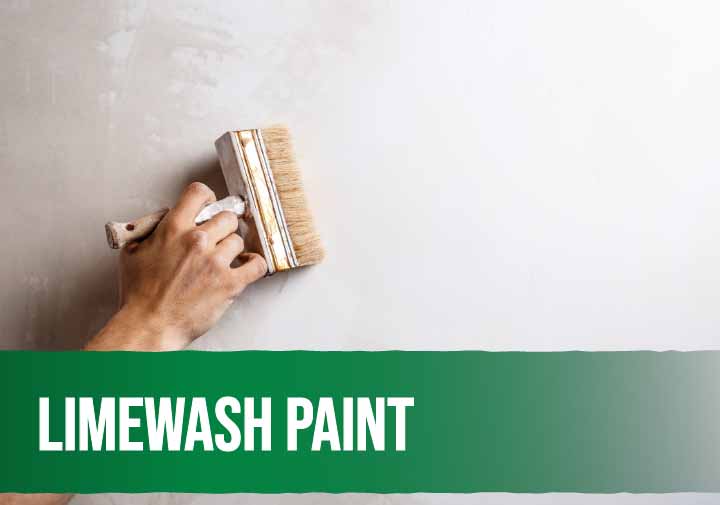
- Apply with a wide masonry brush
Work in irregular strokes for a natural, organic look. Don’t be too neat about it.
- Work in manageable sections
Don’t let edges dry before blending. Wet-on-wet blending is key.
- First coat looks patchy — that’s normal
It builds up with layers.
- Apply 2–3 coats
Each coat adds depth. Let each coat dry before the next (2–4 hours in dry conditions).
- Adjust intensity by diluting
Add water for a lighter, more transparent effect.
Common mistakes:
- Applying to a dry surface – This causes blotchy, uneven absorption. Always lightly dampen the wall with water before you start. The damp surface helps the limewash spread evenly and bond properly
- Trying to make it look perfectly uniform – That defeats the whole purpose. Limewash is supposed to have variation and imperfection. Embrace the natural, organic look with irregular application
- Skipping surface prep – Loose render or dirty brick won’t take limewash properly. Clean the surface, remove loose material, and make sure it’s stable before starting
- Using standard paint primer underneath – This blocks absorption and prevents the limewash from bonding. Use a limewash-specific primer if you need one, or apply straight to bare masonry
Pros, Cons & Durability in the Australian Climate
Pros:
- Stunning, unique aesthetic – Creates a beautiful, layered, aged look that standard paint can’t replicate. Gives your home character and European charm
- Breathable, ideal for older homes – Lets moisture pass through the wall instead of trapping it behind. Perfect for heritage homes where breathability matters for the building’s health
- Natural, low-VOC product – Made from lime and natural pigments. No harsh chemicals or strong fumes during application. Environmentally friendly choice
- Develops character with age – Gets better looking over time as the patina deepens. Each year adds more personality rather than looking worn out
- Relatively affordable product cost – The material itself is inexpensive compared to premium paints
Cons:
- Not suitable for all surfaces – Only works on brick, stone, render, and plaster. Won’t bond to painted surfaces or timber
- Fades faster than standard paint – Needs touch-ups every 5 to 10 years, especially in harsh Australian sun
- Needs sealing in wetter climates – In humid areas, apply a breathable sealer to protect the finish longer
- Not easy to clean if marked – Stains and marks can’t be simply wiped away like painted surfaces
- Application technique matters a lot – Improper application leads to blotchy, uneven results
In the Australian climate:
Traditional lime-based limewash can fade under harsh UV. For South Australian exteriors, look for modern limewash products with UV stabilisers, or seal with a breathable masonry sealer after application for longer-lasting results.
Adelaide’s dry climate is actually ideal for limewash as excessive moisture is the enemy of traditional lime finishes.
Limewash vs Whitewash vs Standard Paint
| Feature | Limewash | Whitewash | Standard Paint |
| Material | Slaked lime | Diluted chalk or lime | Acrylic or alkyd |
| Finish | Textured, layered, matte | Flat, semi-transparent | Uniform, opaque |
| Durability | 10–20 years (with care) | 3–7 years | 7–15 years |
| Breathability | High | High | Low |
| Best surface | Brick, stone, render | Brick, timber | Most surfaces |
Choosing between these options depends on your underlying material and desired aesthetic. Traditional limewash and whitewash are unmatched for their high breathability on masonry and character-rich textures, while standard modern paint offers maximum versatility and uniform color coverage across almost any standard household surface.
FAQs
Can you limewash over painted brick?
Not with traditional limewash. It needs to penetrate the surface, so sealed or painted surfaces won’t work. Some modern “limewash effect” acrylic paints can go over existing paint, though the result is slightly different.
How long does limewash last on exteriors?
Traditional limewash: 5–10 years. Modern UV-stable limewash products: 10–20 years. Regular touch-ups extend the lifespan significantly.
Is limewash suitable for all Australian homes?
It works best on masonry, brick, and render. It’s not ideal for weatherboard or smooth-painted surfaces.
Is limewash hard to maintain?
Touch-ups are straightforward. You don’t need to strip the old coat first. Keep a bit of the original product aside for future repairs.
Does limewash suit Australian homes aesthetically?
Absolutely. It suits the Australian lifestyle. Relaxed, warm, textural. It works especially well on federation homes and limestone cottages common throughout South Australia.
Want the limewash look done right?Get an Adelaide quote →