By Behsud Painting | Adelaide, SA | Updated 2026 | 7 min read
Finding a painter in Adelaide is easy. A quick Google search, a browse through a trade directory, or a post in a local Facebook group will produce more names than you need within minutes. Finding a painter who will show up on time, prepare surfaces properly, use quality paint, leave the job site clean, and stand behind their work if something goes wrong takes a bit more thought.
The painting trade in South Australia has no licensing requirement for most residential work. Anyone can legally call themselves a painter and offer services in Adelaide without formal qualifications. Most painters are genuinely skilled, professional, and reliable. But the absence of mandatory licensing means the quality range between the best and worst operators is wider than in many other trades and the consequences of choosing poorly land entirely on the homeowner.
These 8 questions give Adelaide homeowners a practical framework for evaluating painters before they book. They are not trick questions or gotchas as a professional, experienced painter will answer all of them confidently and specifically.
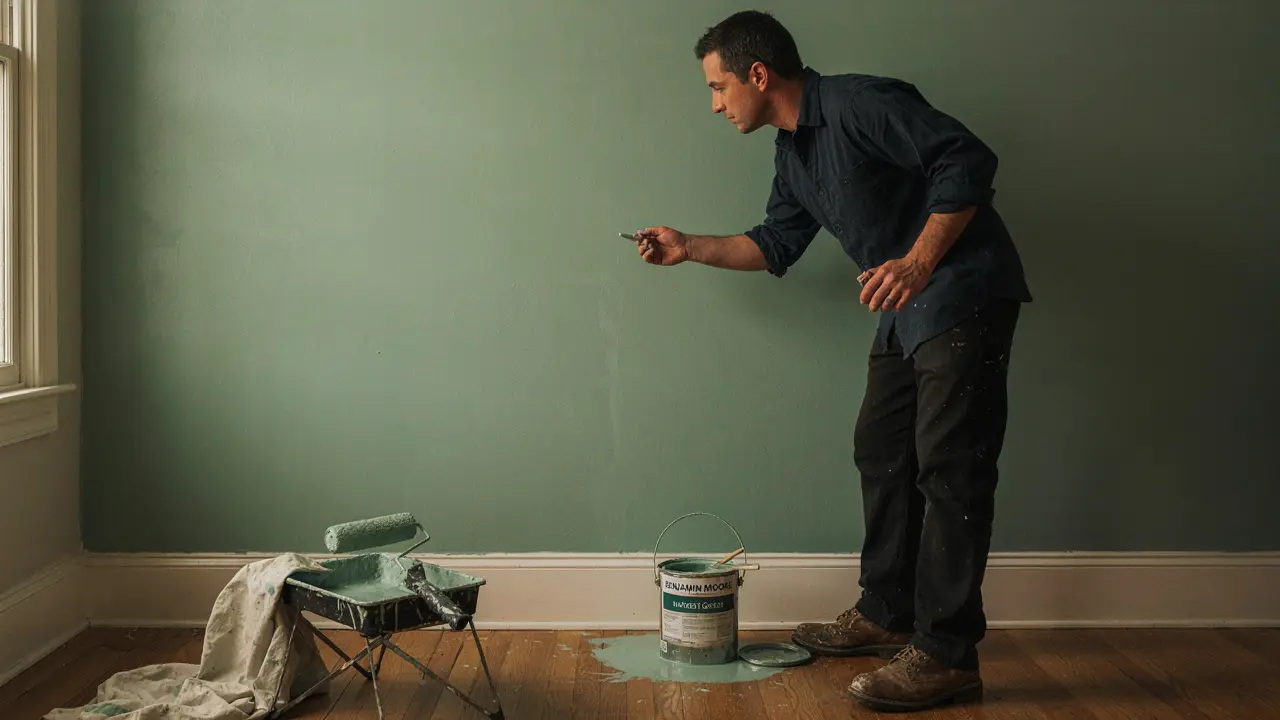
Why Choosing the Right Adelaide Painter Matters
A poor paint job is not just aesthetically disappointing. Paint applied without proper preparation peels and deteriorates far sooner than it should sometimes within 2-3 years for an exterior job that should last 10. Repainting before the expected interval costs money, time, and the disruption of having the house painted again. In some cases, rectifying a poor paint job requires stripping the failed paint back and starting from scratch more expensive than the original job would have been if done correctly.
The preparation stage is where corners are most commonly cut. It is invisible to the homeowner once painting begins but it determines the entire longevity of the result. A painter who fills, sands, cleans, and primes correctly before painting produces a result that lasts. A painter who skips these steps to save time produces a result that looks fine initially and fails within a few years.
The 8 Questions to Ask a Painter in Adelaide
1. Are you insured?
Public liability insurance protects you if the painter damages your property during the work: a broken window, paint spilled on flooring, a ladder incident that damages the guttering. Any painter working in your home should carry public liability insurance as a minimum, and should be able to provide a certificate of currency (the current insurance document) before work begins.
Workers compensation insurance is also relevant if the painter has employees or subcontractors working on your job. If a worker is injured on your property without appropriate coverage, the consequences can be significant. Ask specifically: do you have public liability insurance, and can I see the certificate of currency?
Pro tip: Asking for a certificate of currency is standard professional practice, not an insult. A confident, insured painter provides it without hesitation. A painter who is evasive about insurance is telling you something important.
2. Can you provide a written, itemised quote?
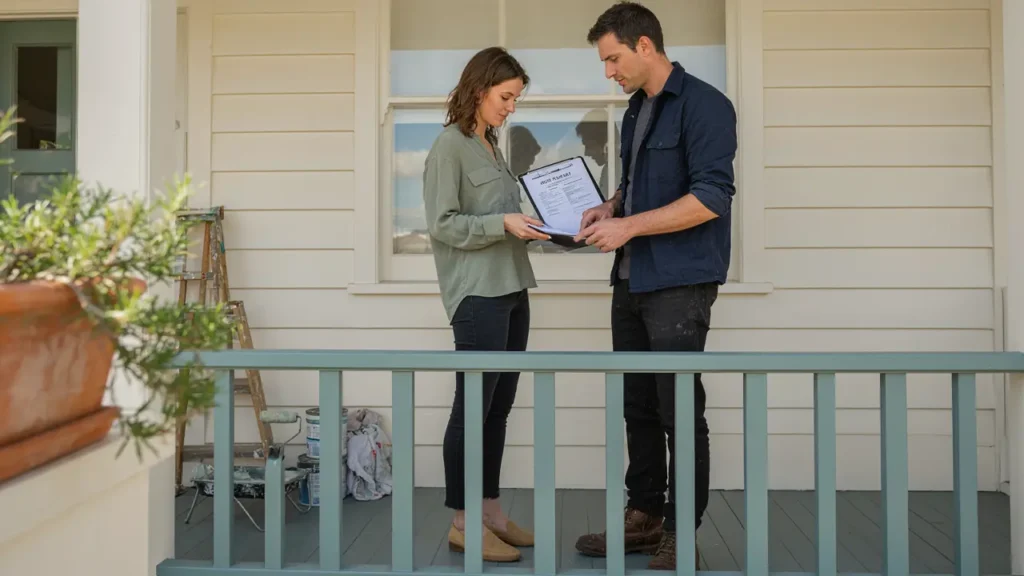
A written quote that specifies what surfaces will be painted, the number of coats, the paint brand and product, and what preparation is included is the foundation of a professional painting engagement. It gives you a clear basis for comparison with other quotes and a reference point if a dispute arises about what was and was not included.
A verbal lump sum 'I can do the whole interior for $3,500' tells you almost nothing. Are those walls and ceilings? Does it include trims? How many coats? What paint? What preparation? Without answers to these questions in writing, you cannot meaningfully compare two quotes or hold the painter to a specific scope.
Watch out: Any painter who refuses to provide a written quote or insists a verbal agreement is sufficient is a significant red flag. Written quotes protect both parties; a professional painter provides them as standard practice.
3. What preparation does your quote include?
This is the most technically important question on the list. The quality and durability of any paint job is determined primarily by the preparation of filling holes and cracks, sanding imperfections, cleaning surfaces, priming where needed. A painter who skips preparation to complete the job faster is saving their time at the expense of your result.
Ask specifically: will you fill and sand holes and cracks in the walls before painting? Will you wash the surfaces before painting? Will you apply primer, and if so, where? A confident, professional answer names specific preparation steps. A vague answer ('we'll do what's needed') does not.
4. Which paint products will you use?
Not all paint is equal. The difference in durability, coverage, and finish between a premium paint (Dulux, Haymes, Taubmans) and a budget product is significant over the life of the paint job. A painter who cannot name the specific product they will use, or who uses the cheapest available product to maximize their margin, is making a choice that directly affects how long your paint job lasts.
Ask for the specific brand and product name. For exterior work, ask whether the product is rated for Australian exterior conditions and UV stability. For kitchens and bathrooms, ask whether the product is a moisture-resistant formula. These are not unreasonable questions; they are the questions a professional painter expects and can answer immediately.
5. How many coats are included?
The number of coats in the quote directly affects both the quality of the finish and the longevity of the result. One coat of paint on a wall produces uneven coverage, visible substrate colour showing through, and a finish that looks thin. Two coats is the standard for a professional repaint. In some situations significant colour change, previously unpainted surfaces, stain-affected areas require three coats or primer plus two coats.
A quote that specifies one coat for a full interior or exterior repaint is almost always cutting corners on quality. Confirm the number of coats before accepting any quote.
6. Can you provide references or examples of recent work?
A painter who has been working in Adelaide for any significant period has a portfolio of completed work and satisfied clients who are willing to speak to a new enquirer. Ask for references from recent similar projects: an interior repaint if that is your scope, an exterior repaint if that is your need, a roof paint if that is what you are pricing.
You do not need to contact every reference, but asking the question filters painters who cannot or will not provide any evidence of their track record. A painter who is reluctant to provide references or whose most recent reference is from several years ago warrants caution.
7. What is your payment structure?
Professional payment structures for residential painting in Adelaide typically involve a deposit at booking (10-20% of the project value), progress payments tied to defined milestones for larger projects, and a final payment on satisfactory completion. This structure protects both parties; the painter has security against a client who disappears, and the client retains leverage to ensure completion and defect rectification.
Watch out: A painter who requires 50% or more of the total payment upfront before any work has started provides you with almost no financial leverage if the work is not completed or is completed poorly. A reasonable deposit is acceptable. A large upfront payment for work not yet done is a risk.
8. Do you provide a workmanship warranty?
A workmanship warranty is the painter's commitment that if defects arising from their work appear within a defined period after completion, they will return and address them at no additional cost. Peeling paint in a section that was improperly prepared, uneven finish in a highly visible area, or paint failure at a junction these are workmanship defects that a professional painter should stand behind.
Ask specifically: what warranty do you provide on your work, and what does it cover? A confident answer names a specific period and specific coverage. An evasive answer ('we stand behind our work') without specifics is not a warranty.
Red Flags: When to Walk Away
Red Flag | What It Usually Means | What to Do |
|---|---|---|
No written quote verbal only | No accountability for scope, price, or inclusions. | Ask for a written quote. If refused, decline. |
Large upfront payment required (50%+) | Minimal financial leverage for you if the job goes wrong. | Offer 10-20% deposit. Walk away if full upfront is insisted upon. |
Cannot name the paint product they use | Either using a cheap product or has not thought through the specification. | Ask specifically. If they cannot answer, decline. |
No public liability insurance | Your property is unprotected if damage occurs during the work. | Ask for a certificate of currency. Walk away if unavailable. |
Quote significantly lower than all others for identical scope | Usually reflects excluded preparation, fewer coats, or cheaper materials. | Ask what is excluded. The gap is almost always in the preparation. |
Cannot provide any recent references | No track record you can verify, or a history they prefer not to share. | Request at least two recent references. If none available, decline. |
Pushes back strongly on site visit | A quote without seeing the job is a guess that becomes a variation. | Insist on a site visit before any quote is provided. |
No clear communication before booking | A painter who does not respond promptly or clearly before the job will behave the same way during it. | Communication quality is a reliable predictor of professionalism. |
How Behsud Painting Answers These Questions
We publish our own answers to these questions because we believe Adelaide homeowners deserve to know who they are dealing with before they call:
- Insurance: Behsud Painting carries public liability insurance. Certificate of currency available on request before any work commences.
- Written quotes: Every Behsud Painting quote is provided in writing following a free site visit. We do not provide verbal lump sums.
- Preparation: Our quotes specify what preparation includes filling, sanding, cleaning, priming based on the specific condition of the surfaces we inspect on site.
- Paint products: We use quality paint brands appropriate to each application. We can name the specific product we plan to use on your job before you book.
- Number of coats: Two coats is our standard. Three coats or primer plus two where the surface condition requires it. We specify the number of coats in every written quote.
- References: We can provide references from recent similar projects across Adelaide on request. Ask at the site visit.
- Payment structure: Deposit at booking, final payment on satisfactory completion. We do not request large upfront payments.
- Workmanship warranty: Behsud Painting provides a workmanship warranty on completed projects. If a defect arising from our work appears within the warranty period, we return and address it.
Get a free quote from Behsud Painting Adelaide call 041 5277 399 or email habibhussain.2013@yahoo.com. Written quotes, insured, no-obligation site visits across all Adelaide suburbs. Book at behsudpainting.com.au.
Frequently Asked Questions: Choosing a Painter in Adelaide
Does a painter need to be licensed in South Australia?
There is no specific painter's licence required for most residential painting work in South Australia. However, building work above $10,000 in contract value requires a registered building contractor licence from the Consumer and Business Services (CBS) SA. Public liability insurance is not legally mandated but is standard professional practice for any painter working in a client's home. When assessing a painter, insurance and a professional track record are more meaningful practical indicators than formal licensing in the current SA regulatory environment.
How many quotes should I get for a painting job in Adelaide?
Getting two to three written, itemised quotes gives you a useful basis for comparison without excessive effort. Focus on comparing scope rather than headline price, what preparation is included, which paint products are specified, how many coats are in the quote. A quote that is 30-40% below others for the same stated scope almost always reflects excluded preparation, fewer coats, or cheaper materials rather than genuine efficiency. The cheapest quote is rarely the best value once the full scope is understood.
Should a painter do a site visit before quoting in Adelaide?
Yes. An accurate painting quote requires seeing the surfaces, the wall condition, access requirements, surface type, and any specific challenges that affect the scope. A quote provided over the phone or by email without a site visit is a guess that often becomes a variation (additional charges) when the painter arrives and sees the actual conditions. Behsud Painting provides free site visits for all Adelaide painting quotes call 041 5277 399 to arrange yours.
What should I do before a painter arrives to quote in Adelaide?
You do not need to do much preparation for a painting quote visit. It helps to have thought through which surfaces you want painted (walls only, walls and ceilings, trims) and any specific concerns (a problem wall with cracks, a bathroom with mould history, a colour you have in mind). Having previous paint tins available if you want to match existing colours is useful. Beyond that, a site visit is the painter's opportunity to assess the job; you do not need to prepare the surfaces before the quote.
How do I know if a painter has done a good job in Adelaide?
After a professional interior or exterior paint job, you should be able to: run your hand across the walls and find no visible brush marks, roller lines, or uneven texture; see clean, sharp lines at all edges where the paint colour changes (wall to ceiling, wall to trim); find no drips, splatter, or overspray on surfaces that were not being painted; and see consistent sheen level across the full painted area. Any significant defects in these areas should be raised with the painter before the final payment is made.